A $5 million purse, and the people who see none of it
Opinion 1,295 wordsThe Caulfield Cup carries $5,000,000. Follow it all the way down and the money stops a long way above the people who had the horse eating at four in the morning.
 By Clive Batterham
7 min read
Opinion. This is one writer’s argument and not a news report. The numbers in it are checked; the conclusion drawn from them belongs to the byline, and you are entitled to a different one.
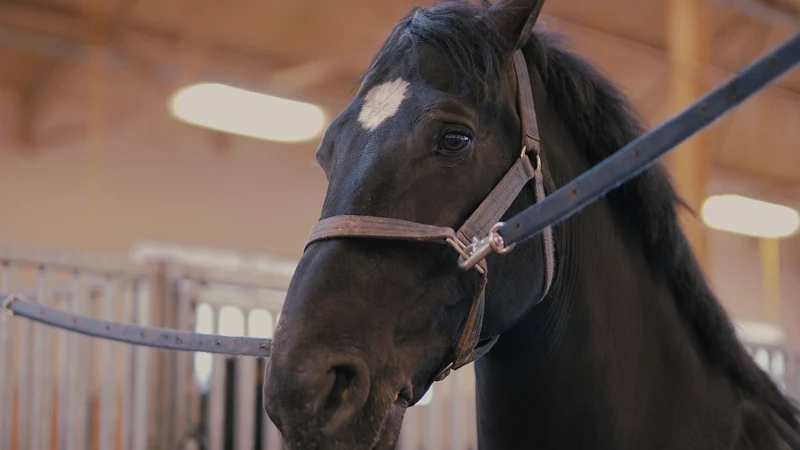
The Caulfield Cup on 17 October carries $5,000,000. That figure gets printed on everything for a fortnight and almost nobody follows it down to the bottom, so here is the whole descent, in order, with the arithmetic shown.
A $5 million Group 1 handicap of this shape is distributed across the field roughly like this. The exact schedule is set by the club and the principal racing authority and moves a little from year to year, but the proportions do not:
- First: $2,900,000
- Second: $850,000
- Third: $425,000
- Fourth: $250,000
- Fifth: $150,000
- Sixth to tenth: $75,000 each
- Every other starter: $6,250
Eighteen go around, so that adds to the five million exactly. Fifty-eight per cent of the pool goes to one horse. Eight of the eighteen share one per cent of it between them, which works out at rather less than the cost of getting the horse to the race.
Off the top
Nobody is handed $2,900,000. The standard deductions in an Australian stable are ten per cent to the trainer and five per cent to the rider, taken off the horse’s cheque before the owners see any of it. On this race that is $290,000 to the trainer and $145,000 to the jockey. The rider also collects a riding fee of around $250, which is paid whether the horse wins the Caulfield Cup or runs last in it, and which is the only guaranteed money anybody in the saddle earns.
That leaves $2,465,000 for the owners, before GST is sorted out, before the syndicate manager takes a management fee, and before the stable account for the previous quarter is settled.
Now divide it. A twenty-share syndicate holding five per cent each gets $123,250 a share. Against that, the five per cent share of a $550,000 yearling cost $27,500 to buy. Training at a metropolitan rate of about $115 a day is $41,975 a year for the whole horse, and once you add the farrier every five weeks, the vet, the dentist, the float, insurance at something near three per cent of value and the nominations and acceptances, the all-up figure is closer to $62,000 a year. That is $3,100 a year for a five per cent share. Three years of it is $9,300.
So the share cost about $36,800 all up and returned $123,250 on one Saturday. That is a very good outcome and it is the reason the whole structure exists.
Run the same sum for a horse that finishes fourteenth. Gross $6,250, less the trainer’s ten per cent, leaves $5,625 to be divided twenty ways. That is $281 a share, against $3,100 a year in fees. On the published returns the median Australian racehorse does not earn its training bill, and it is not close. That is not a scandal. It is the arithmetic of the thing, and it is printed nowhere near the $5,000,000.
The ten per cent and the five
A $290,000 commission reads like a trainer’s business and it is not. Trainers live on the day rate and the percentage is the margin on top of it, which is why they are all so careful about where a horse runs.
Pat Swanzy has thirty-four horses in nineteen boxes behind the Moonee Valley straight. Thirty-four at $115 a day is about $1.43 million a year gross. Out of that comes six or seven full-time staff on the Horse and Greyhound Training Award, where the hourly rates sit in the mid-twenties and the loaded annual cost per person runs well past $60,000; then feed, bedding, rent on the boxes, the truck, the vet account, workers compensation and the insurance nobody budgets properly. The stable has won thirty-eight races this season from 212 runners and $4.9 million in prizemoney, which means Swanzy’s ten per cent is a real number. In a flat season it is the difference between the business working and not working, and a flat season is most of them.
Wes Halloran runs 612 runners and $14.8 million through Flemington in a season, which is a different kind of enterprise with a different kind of payroll. Lou Castellano wins seventy-two races a year at Morphettville for $4.2 million, drives his own float across the border and stays at the same motel in Keilor he has used since 2011, because the percentage on an interstate placing does not stretch to much else.
The rider’s five per cent is narrower than it looks too. It applies to the horse’s cheque, not to the jockey’s year. Emma Pridham has ridden 142 horses this season for twenty-nine wins and $2.18 million in prizemoney earned by her mounts. Riding fees on 142 rides are something near $35,500. Her percentage of the stakes her mounts actually won is a good deal less than five per cent of that $2.18 million, because she was not on every cheque. From the total come the manager’s cut, the drive from Ballarat, gear, the levy for the riders’ insurance scheme, and the fourteen meetings she sat out in June for careless riding, which paid nothing at all. Dallas Moore rode 412 horses for sixty-eight wins and $9.42 million. The same percentages apply to him and produce a different life.
The people who get none of it
Nowhere in the distribution schedule is there a line for the person who leads the horse up.
The strapper is on the award. Mid-twenties an hour, a split shift that starts at 4.15am and finishes at eleven and then starts again at 2.30, usually six days, and on a carnival Saturday it is a fourteen-hour day with a float trip in the middle. A trackwork ride pays a fee in the thirties or forties depending on the stable. The float driver is paid by the kilometre. The stable foreman is salaried and on call for colic at two in the morning. The farrier is a contractor who gets paid whether the horse wins or not, which makes him the only person in the chain with a predictable income.
Some stables cut their staff in on a win. It comes out of the trainer’s ten per cent and it is done on a handshake. Some stables do not. There are best-presented awards on the big carnival days worth a few thousand dollars, which is a genuine thing and is also the sort of thing an industry points at when the question is asked.
Nothing in the schedule pays the person who had the horse eating at four in the morning. That is not an oversight. That is the schedule.
I am not arguing that a stablehand should be handed a percentage of a Group 1. I am noting that if the industry wanted the people who do the work inside the distribution, it would put them inside the distribution, and that it has had a hundred and sixty years to do it.
Where the five million comes from
The purse is not a gift from the club. It is built mainly out of wagering: race-fields fees charged on turnover, state wagering taxes returned to the industry, media rights, and the clubs’ own gate and hospitality revenue. Put a dollar through a win tote pool and roughly fourteen and a half to sixteen cents of it never comes back to the pool, with more taken out of the exotics. That deduction is split between the operator, the state and racing itself, and the racing share is what eventually becomes a Caulfield Cup.
Which means the crowd on the lawn funds the trophy, two steps removed and without a receipt. Paddock Lawyer and Mallee Gold both go around in races this spring whose prizemoney came out of exactly that deduction, and Sugar and Steel will too in November when she comes back from a spell.
On Saturday evening somebody will hold a silver cup up on the lawn at Caulfield and be photographed with it. The strapper will be in that photograph, on the left, with a lead rein in her hand and a rug over her arm. She is on the day rate.
- Prizemoney
- Industry
- Ownership
- Stable staff
Comments (3)
The comments filed with the story were written at the desk, names and dates and all. Anything posted from the form below is the reader’s own.
Marg, Mordialloc
My brother strapped for a city stable for eleven years. Split shift, six days, and the one Group 1 the stable won he got a hundred dollars and a beer. He is not bitter about it, which is somehow worse.
stable_rat_82
Fair piece and the day rate numbers are about right for Melbourne. You left out that half the staff are also paying rent within twenty minutes of the track, which is the part that is getting impossible.
Don H
Been in two syndicates over fifteen years and the $281 against $3,100 line is the honest version of ownership that nobody puts in the brochure.
Comments are open to registered readers. Sign in or create an account — we ask for a username, an email and a password, nothing else.