The crowd remembers one race and prices the rest wrong
Opinion 1,144 wordsIronbark Lad and Paddock Lawyer carried the same weight at Caulfield and finished four tenths of a length apart. One of them is $5.50 and the other is $9.00.
Opinion. This is one writer’s argument and not a news report. The numbers in it are checked; the conclusion drawn from them belongs to the byline, and you are entitled to a different one.

Ironbark Lad won the Caulfield Stakes on 10 October by four tenths of a length with 58.5kg on his back, and by the time the field had walked back past the mounting yard the race had been rewritten in about four thousand heads at once. Best stayer in the country. Certainty for the Cup. He was $5.50 that night and he is $5.50 this morning, and the money has not moved because the money has stopped thinking about it.
Paddock Lawyer ran second in that race with the same 58.5kg. Beaten 0.4 lengths. Tahlia Brough had him one off the fence from the 800m and at the 200m there was nothing in it worth an argument. He has had 38 starts for six wins and fifteen seconds, which is the record of a horse who is always there and hardly ever in front, and the stand has a word for that kind of animal and it is not a generous one. Pat Swanzy sends him to the Valley on 24 October at $9.00 with Dallas Moore taking over the ride.
Two horses, the same weight, four tenths of a length. One of them is a good thing and the other is a professional second, and the only difference anybody can name is whose nose was in front at ten past five on a Saturday.
Twenty-five minutes is not long enough
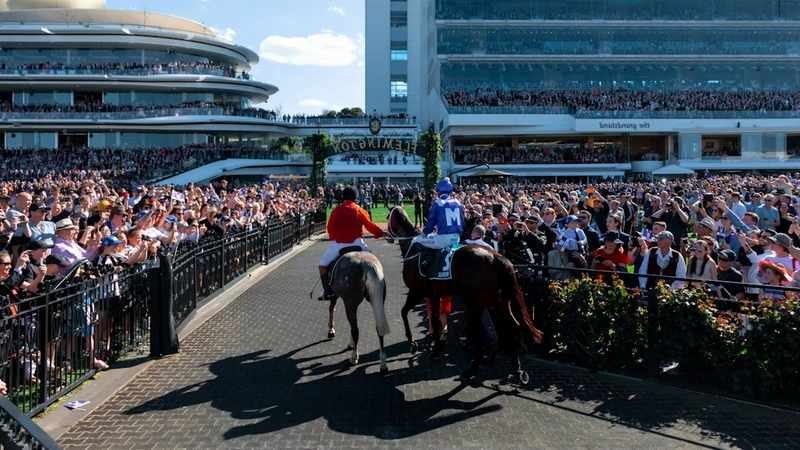
There are about 25 minutes between races at a metropolitan meeting. Twenty-five minutes to get down the steps, queue four deep at the bain-marie for a pie and a coffee that come to fourteen dollars, climb back up, find the page, mark it with a biro and decide. Nobody re-reads six starts in that window. What they do instead is remember the thing they watched with their own eyes, which is one race, on one track, at one rating, from one rail position.
That is not stupidity. Under that kind of time pressure it is the only thing the human head does honestly, and the form guide helps it along. The last start is printed on the left and the eye begins on the left. The run from four weeks ago, on a Soft 5, over a trip that did not suit, with a different rider, sits two columns to the right where nobody is looking. So the market gets built out of one afternoon of memory, every Saturday, and has been for a hundred and fifty years.
Barrier Rogue is the cleanest case I have seen this spring. On 5 September at Caulfield he ran ninth of fourteen on a Soft 5 over 1400m, beaten six and a half lengths, and he was $5.50. Three weeks later he went to Moonee Valley over the mile with a kilo more on his back, 59kg, and won by 0.4 lengths. He was $6.50 for that. Dean McIlwraith had changed the going, the trip and the rider, and the market priced the ninth and ignored the rest. Then on 10 October he ran third at Caulfield over 1600m at $8.00, a longer price again off a better run. Line the three up and there is no logic in them anywhere.
Last Race Money is the same coin the other way around. She was fourth at Caulfield on 26 August at $7.00 and that is the start people will quote at you. Emma Pridham came back on, the mare was second at Flemington at $3.80 on 16 September and won at the Valley on 7 October at $4.60. Wes Halloran had been saying since winter that she wanted 1200m and dry ground, which is exactly what she got, and nobody paid for the information until after she had won with it.
The horse that was beaten half a length
Here is the useful part, and it is not complicated. The market pays for the finish it watched. It will not pay for the finish it has to work out. A horse that leads and gets run down by half a length inside the last 50m has run the same race as the one that came out of midfield and got there, and next start it will be twice the price, because everybody in the building saw it being passed.
The market pays for the finish it watched. It will not pay for the finish it has to work out, and that gap is the only edge anybody at the rail has ever had.
Paddock Lawyer has been doing this to people for three years. Second in the Turnbull at $8.50. Second in the Caulfield Stakes at $9.00. Third in the Makybe Diva at $7.50. Nobody is pretending he is a champion. He is a horse who runs within half a length of his best whenever he goes around, and his price keeps drifting because the one thing he does not do is win, and winning is the one thing the crowd keeps.
I did the same thing six weeks ago with the horse at the top of this column. Ironbark Lad ran fifth in the Makybe Diva on 12 September, beaten 2.6 lengths with 58.5kg, and I wrote here that he looked like a six-year-old who had left his best in the autumn. He was $9.00 that afternoon. He has since run third in the Turnbull and won the Caulfield Stakes, and on Saturday he carries 57.5kg in a Cup. The fifth was the most recent thing I had seen, so the fifth was what I wrote about. It is the same disease and there is no cure for it. There is only the habit of reading two columns further to the right.
What it is worth in money
Less than you would like. Recency is a real distortion and it is a large one, but it is not a licence, and almost nobody is in front at the end of a season doing anything at all. Maybe one in twenty-five. This masthead publishes its own tipping ledger with a negative return printed on it, which is the honest number and also the reason nobody here has ever sold a system.
What the one-race memory gives you is a question. When a price looks wrong, work out which race the crowd is remembering, then go and look at the two starts either side of it. Most of the time the price is wrong by fifty cents and not worth the petrol. Every few weeks it is wrong by three dollars, and that is a Saturday worth driving to.
Prices quoted here are indicative market figures at the time of writing and are published as a market indicator only.
Caulfield on Saturday, then. Eighteen accepted for the Cup, the barriers come out of a bag later this morning, and the forecast is fine and 21 degrees with a light south-westerly. By eight o’clock on Saturday night one of those eighteen will be the only horse anybody can name, and the other seventeen will have run the race nobody remembers.
Then everyone goes to the car park.
- Recency
- Form
- Caulfield Cup
- Opinion
Odds shown are indicative market prices at time of publication and do not constitute a betting recommendation.
Tips are editorial opinion only — not financial advice or a recommendation to wager.
Comments (4)
The comments filed with the story were written at the desk, names and dates and all. Anything posted from the form below is the reader’s own.
Col from Bendigo
Fifteen seconds from thirty-eight starts. You could set your watch by that horse and the market still wants nine dollars about him. Best value animal in the country and nobody wants to hear it.
Davo
Or the winner won because he is better. Four tenths is four tenths and it went the right way. You can talk about memory all you like, one of them got his head in front and the other one has been doing this for three years.
Trev W
The Barrier Rogue bit is spot on. I had him at the Valley because of the trip and the rider and I still nearly talked myself out of it over the ninth. Six and a half lengths on a Soft 5 means nothing at all.
Lorraine
Fourteen dollars for a pie and a coffee is the real story. Twenty-five minutes and half of it spent in a queue. No wonder nobody reads the form properly.
Comments are open to registered readers. Sign in or create an account — we ask for a username, an email and a password, nothing else.