Melbourne, VIC
Flemington
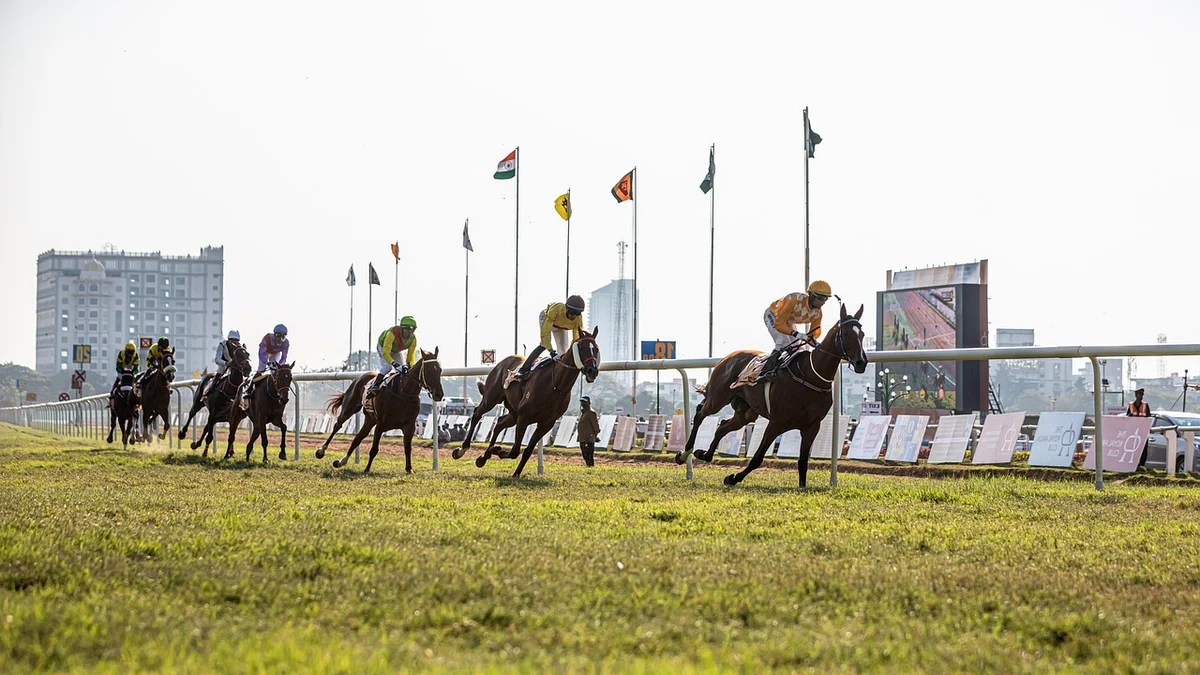
The biggest stage in Australian racing: a wide left-handed circuit of 2312m, 450m of straight, and a separate 1200m straight course for the sprinters.
 By Ray Donnelly
Updated
Track guide, kept current through the season: the configuration, the going notes, the standard times and the race days are read back each week of the carnival. Clubs move the rail and the gate times in the last few days and they do not always say so.
The facts
Every trackThoroughbred VIC Victoria Racing Club
Circumference and straight are the course proper. Capacity is the club figure for a full house, which at most tracks has been reached once and talked about ever since. Rail positions are published by the club during the week and move the fresh ground as well as the trip.
The shape of the track
Flemington is a wide left-handed pear, 2312m around, with 450m of straight to the post. The straight is the whole argument. A horse can be eighth on the home turn and still win, which is why the track rewards a rider who is not in a hurry at the 600m and why a leader who went too hard gets found out in public, over the last 200m, in front of 90,000 people who all saw it happen.
There is a second course inside the first one. The straight course runs 1200m in a line with no turn at all, and sprinters that cannot handle a corner come here and run personal bests. Draws matter on the straight in a way they rarely do around the circuit, because the ground is not identical from fence to fence and the field usually splits into two groups somewhere near the 400m. Whichever group the better riders join is the one to be in, and you can usually tell from the first race of the day.
Around the course proper the turns are long and the camber is kind, so wide gates cost less than they do at Caulfield. The 3200m start sits on the straight course, which means the Melbourne Cup field runs the best part of 900m and past the winning post before it reaches a bend. Twenty-four horses settling over that stretch is where the Cup is most often lost, and the losing is quiet. Nobody notices until the 600m.
What the track does to a race
Flemington drains better than its reputation and a wet week does not guarantee a Heavy track by Saturday; 11mm on a Thursday is usually a Good 4 by the second race. On the straight course, watch which side of the track the first sprint is won on and then believe it for the rest of the day, because the riders will. The rail goes out for the carnival Saturdays and the home turn tightens with it, which flatters anything that can run the last 400m in under 23 seconds. The first race tells you almost nothing. The fourth usually tells you everything.
The races that matter here
The race cards| Race | Grade | Distance | Card |
|---|---|---|---|
| Melbourne Cup | Group 1 | 3200m | Field and form → |
| Victoria Derby | Group 1 | 2500m | Field and form → |
| VRC Oaks | Group 1 | 2500m | Field and form → |
| Mackinnon Stakes | Group 1 | 2000m | Field and form → |
| All-Star Mile | Group 1 | 1600m | Field and form → |
| Newmarket Handicap | Group 1 | 1200m | Not carded |
Scroll the table sideways to see every column.
6 features on the list, 5 of them carded here. The rest are run outside the window we hold fields for, which is most of the year.
Next race days here
The calendar| Date | Race | Grade | Distance | Prizemoney |
|---|---|---|---|---|
|
4.40pm, in 15 days |
Victoria Derby
14 to run |
Group 1 | 2500m | $2,000,000 |
|
3.00pm, in 18 days |
Melbourne Cup
24 to run |
Group 1 | 3200m | $8,750,000 |
|
4.20pm, in 20 days |
VRC Oaks
15 to run |
Group 1 | 2500m | $1,500,000 |
|
4.25pm, in 22 days |
Mackinnon Stakes
16 to run |
Group 1 | 2000m | $3,000,000 |
Scroll the table sideways to see every column.
All 4 of those days carry a full card here: the field, the barriers, the weights and the form, all of it written at this desk. At a real meeting the stewards publish scratchings on the morning and change half of it.
Data as of 16 October 2026. Dates, distances, prizemoney and standard times are as published by the club and move without notice. Verify with official sources before acting.
Standard times
| Distance | Standard time |
|---|---|
| 1200m | 1:08.80 |
| 1400m | 1:21.60 |
| 1600m | 1:34.20 |
| 2000m | 2:00.90 |
| 2500m | 2:32.00 |
| 3200m | 3:18.50 |
A standard time is the benchmark for the trip on a Good 3 or 4 with the rail true. Two seconds outside it on a Soft 6 means nothing; two seconds outside it on a firm track means the race was run slowly and the winner beat the horses that were there, which is all it ever beat.
History
The first meeting on the flat beside the Saltwater River, now the Maribyrnong, was run in March 1840, when the place was simply called the Melbourne Racecourse. The Victoria Racing Club was formed in 1864 and took the course on, three years after the first Melbourne Cup had already been run. Archer won that 1861 Cup in front of a crowd of about 4,000 for 710 gold sovereigns and a gold watch, and the race has been the first Tuesday fixture of the Australian year ever since.
The grandstands went up in pieces across a century and a half, the roses came later, and the course was added to the National Heritage List in 2006 for its place in Australian social history as much as its racing. The record Cup Day crowd stands at 122,736, set in 2003. Crowds are smaller now and the television audience is larger, which is a different business but the same race.
Getting there
- By train
- Special event trains run direct to Flemington Racecourse station from Flinders Street on race days, with tram route 57 along Epsom Road as the alternative.
- By car
- About fifteen minutes from the city via Flemington Road and Epsom Road, and a good deal longer on Cup Day, when Smithfield Road backs up from mid-morning.
- Parking
- Paid parking on course off Epsom Road and Smithfield Road, plus free street parking in Ascot Vale for anyone happy to walk fifteen minutes.
- Access and gates
- Step-free entry at the main gates, accessible viewing on the lawns and in the Hill Stand, and accessible toilets through all public areas.
Public transport runs to a race-day timetable and a full house empties slower than it fills. The pros walk out after the eighth and are on the train before the last is called; everybody else is in the car park at six, waiting for the row in front to move.
Get race previews in your inbox
Race previews, expert tips and breaking news — delivered to your inbox.