Melbourne, VIC
Caulfield
The Heath: a left-handed 2080m circuit with tight turns, a 360m straight and a Cup start that makes the barrier draw the story.
 By Ray Donnelly
Updated
Track guide, kept current through the season: the configuration, the going notes, the standard times and the race days are read back each week of the carnival. Clubs move the rail and the gate times in the last few days and they do not always say so.
The facts
Every trackThoroughbred VIC Melbourne Racing Club
Circumference and straight are the course proper. Capacity is the club figure for a full house, which at most tracks has been reached once and talked about ever since. Rail positions are published by the club during the week and move the fresh ground as well as the trip.
The shape of the track
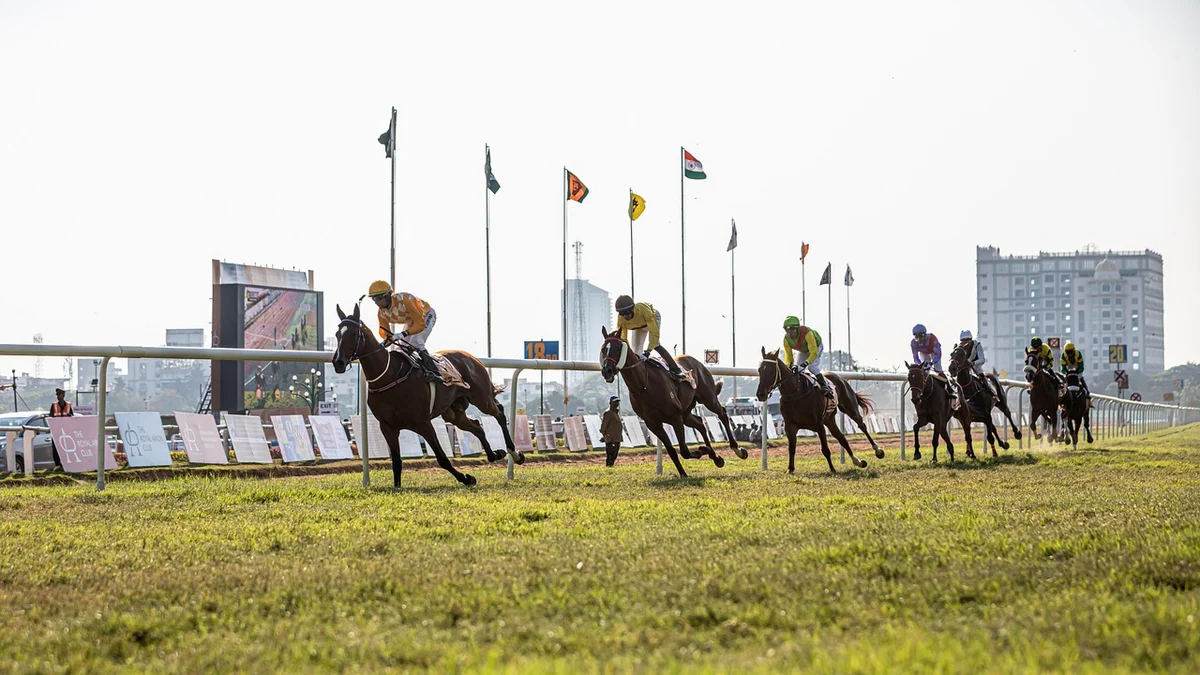
Caulfield is 2080m around, left-handed, with turns that come at you and 360m of straight at the end of it. That is a short run home by the standards of the other metropolitan tracks, and it changes what a horse needs. Position is worth more than finishing speed here. A midfield horse three wide with cover is in a good race; a midfield horse three wide without cover is in a bad one, and the difference is about two lengths at the 300m.
The Caulfield Cup is 2400m on a 2080m circuit, so the start is in the home straight, 320m from the post, and the field runs past the winning post and straight into the first turn. Eighteen horses, a short run to a bend and a wide draw is not bad luck, it is arithmetic. Barriers in double figures have been losing this race for about forty years and the market goes on being surprised about it every October.
Over the sprint trips the shape is different again. The 1100m and 1200m starts give a reasonable run to the bend, the tempo is genuine, and the horses that win are the ones that can hold a position without being hustled. Caulfield is not an unfair track. It is a track with less room to fix a mistake, which is a different thing.
What the track does to a race
Caulfield takes rain and holds it longer than Flemington does, and when the rail goes out the ground closest to the fence has already had a fortnight of work on it. On a Soft 6 the leaders are rarely run down from further back than fifth. In a 2400m handicap the draw is worth more than 1.5kg of weight, and anybody who tells you otherwise has not sat through the last eight Caulfield Cups with a biro. Watch the third race for the pattern, then stop thinking about the first two.
The races that matter here
The race cards| Race | Grade | Distance | Card |
|---|---|---|---|
| Caulfield Cup | Group 1 | 2400m | Field and form → |
| Caulfield Guineas | Group 1 | 1600m | Not carded |
| Blue Diamond Stakes | Group 1 | 1200m | Not carded |
| Oakleigh Plate | Group 1 | 1100m | Not carded |
Scroll the table sideways to see every column.
4 features on the list, 1 of them carded here. The rest are run outside the window we hold fields for, which is most of the year.
Next race days here
The calendar| Date | Race | Grade | Distance | Prizemoney |
|---|---|---|---|---|
|
5.15pm, tomorrow |
Caulfield Cup
17 to run |
Group 1 | 2400m | $5,000,000 |
Scroll the table sideways to see every column.
That day carries a full card here: the field, the barriers, the weights and the form, all of it written at this desk. At a real meeting the stewards publish scratchings on the morning and change half of it.
Data as of 16 October 2026. Dates, distances, prizemoney and standard times are as published by the club and move without notice. Verify with official sources before acting.
Standard times
| Distance | Standard time |
|---|---|
| 1100m | 1:03.40 |
| 1200m | 1:09.60 |
| 1400m | 1:21.90 |
| 1600m | 1:35.10 |
| 2000m | 2:01.80 |
| 2400m | 2:26.50 |
A standard time is the benchmark for the trip on a Good 3 or 4 with the rail true. Two seconds outside it on a Soft 6 means nothing; two seconds outside it on a firm track means the race was run slowly and the winner beat the horses that were there, which is all it ever beat.
History
Racing began on the Caulfield Heath in 1859, on a reserve that had been set aside with public access in mind, a point that has been argued over ever since. The Victoria Amateur Turf Club was formed in 1875, ran the course for the next century, and renamed itself the Melbourne Racing Club in 1976. The Caulfield Cup was first run in 1879 and has been the pivot of the Melbourne spring for most of its life, the race that sorts out who is going to Flemington on the first Tuesday.
The course was handed over to the military in both world wars and came back each time to the same shape. The land itself is a Crown reserve held under a trust, which was restructured in 2017 after years of public criticism about how much of the middle of the track the community could actually use. For a place best known for a 2400m handicap, a surprising amount of its history is about land.
Getting there
- By train
- Caulfield station is across the road from the gates and is served by the Frankston, Pakenham and Cranbourne lines, about twenty minutes from Flinders Street.
- By car
- Off Dandenong Road and Normanby Road, roughly twenty-five minutes from the city outside peak hour.
- Parking
- Limited paid parking on course, with metered and time-restricted street parking through Caulfield East that fills up by midday.
- Access and gates
- Accessible entry at Gate 1 off Station Street, lift access in the main grandstand and accessible seating in the public stand.
Public transport runs to a race-day timetable and a full house empties slower than it fills. The pros walk out after the eighth and are on the train before the last is called; everybody else is in the car park at six, waiting for the row in front to move.
Get race previews in your inbox
Race previews, expert tips and breaking news — delivered to your inbox.